
🚚 The logistics sector is booming in 2026, driven by e-commerce growth and the surge of flexible, remote businesses.
💡 If you are curious about how to start a dispatching business, this guide gives you a clear, step-by-step path to success, even if your budget is tight.
📋 Here’s what you will discover:
The dispatching industry’s evolution
Legal and compliance essentials
Must-have tools and tech
Service setup and marketing
Strategies to future-proof your venture
🔑 Ready to transform your ambition into a thriving, home-based dispatching business? Dive in and unlock your potential!
Understanding the Dispatching Business Landscape in 2026
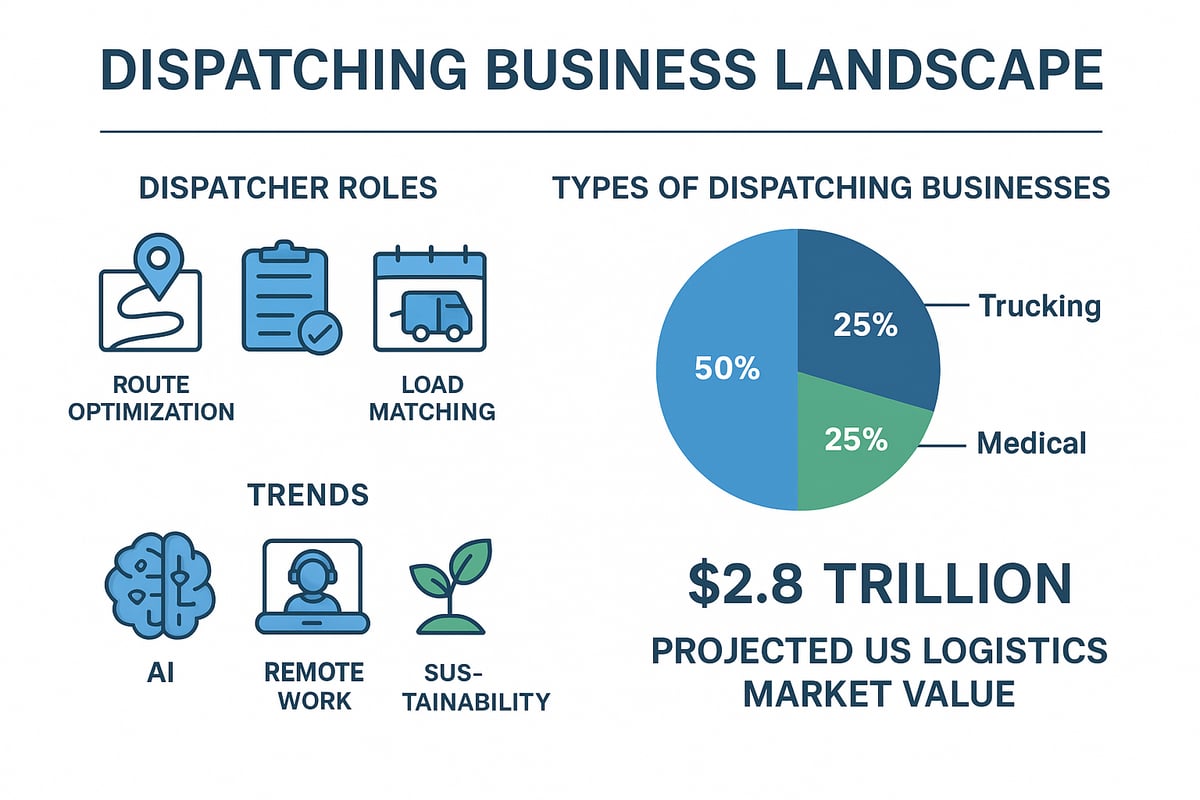
The logistics industry is transforming at a rapid pace, making it an exciting time for those researching how to start a dispatching business. Dispatchers play a pivotal role in connecting freight with carriers, ensuring goods move efficiently across the nation. In 2026, dispatching is more than a support function—it is the heartbeat of modern supply chains.
The Role of a Dispatcher in Modern Logistics
Dispatchers act as the air traffic controllers of the trucking world. Their core responsibility is to coordinate freight movement, match loads to available trucks, and support carriers every step of the way. When learning how to start a dispatching business, understanding these duties is essential.
Key responsibilities include:
Load matching and booking
Optimizing routes for time and cost
Monitoring compliance with regulations
Independent dispatchers differ from freight brokers by working directly for carriers, not shippers. As the US logistics market is projected to reach 3.8 trillion dollars by 2033, driven by e-commerce, digitization, and the gig economy, the opportunity is immense. The rise of remote work and technology adoption is reshaping the dispatching landscape for newcomers.
Types of Dispatching Businesses You Can Start
When exploring how to start a dispatching business, you will find multiple models to choose from. The most common are:
Trucking dispatch for owner-operators and small fleets
Specialized dispatch such as medical courier, last-mile, or Amazon Relay
Regional operations focusing on a specific area
Nationwide services for broader reach
You can launch from home or set up a small office. For instance, medical courier dispatching for local clinics is in demand. Each model has its pros and cons, with home-based businesses offering lower costs but potentially limited scalability. Niche dispatching services, like refrigerated loads or hazmat, are gaining traction as they face less competition.
Skills and Qualities Needed for Success
Anyone considering how to start a dispatching business must develop key skills to thrive. Communication and negotiation are at the top of the list, as dispatchers regularly interact with drivers, shippers, and clients.
Other vital skills:
Tech proficiency with dispatch software and load boards
Problem-solving and multitasking under pressure
Knowledge of legal and regulatory requirements
For example, strong negotiation can directly improve carrier profits by securing better rates. Customer service is crucial, as dispatchers are the primary point of contact for clients. Adaptability is essential in this fast-paced environment, where every day brings new challenges.
Industry Trends and Opportunities in 2026
The dispatching sector is undergoing digital transformation. Automation and AI-driven route planning are becoming standard tools for those looking into how to start a dispatching business. The demand for 24/7 dispatch services continues to rise, with more small carriers outsourcing their dispatching to freelancers.
Key trends include:
Growth of remote and freelance dispatchers
Stricter compliance requirements
Sustainability initiatives like eco-friendly routing
Opportunities in underserved regions and industries
Recent data shows that 40 percent of small carriers now outsource dispatching, signaling robust market potential. Green logistics and digital tools are opening new doors for innovative business models.
Common Challenges and How to Overcome Them
Starting out, many face stiff competition from established agencies. Navigating complex regulations and building a trustworthy carrier network are common hurdles when planning how to start a dispatching business.
Other challenges include:
Managing cash flow and timely billing
Overcoming technology learning curves
Solutions involve:
Investing in training and mentorship
Leveraging advanced dispatch software
Continuing education to stay ahead of industry changes
For instance, mastering new technologies early can give you an edge over competitors. Ongoing learning and adaptability are your best tools for long-term success in the dispatching field.
Step 1: Research and Planning Your Dispatching Business
Starting your journey in the world of dispatching begins with solid research and strategic planning. Laying this groundwork is essential for anyone interested in how to start a dispatching business that stands out in 2026.
Market Research and Identifying Your Niche
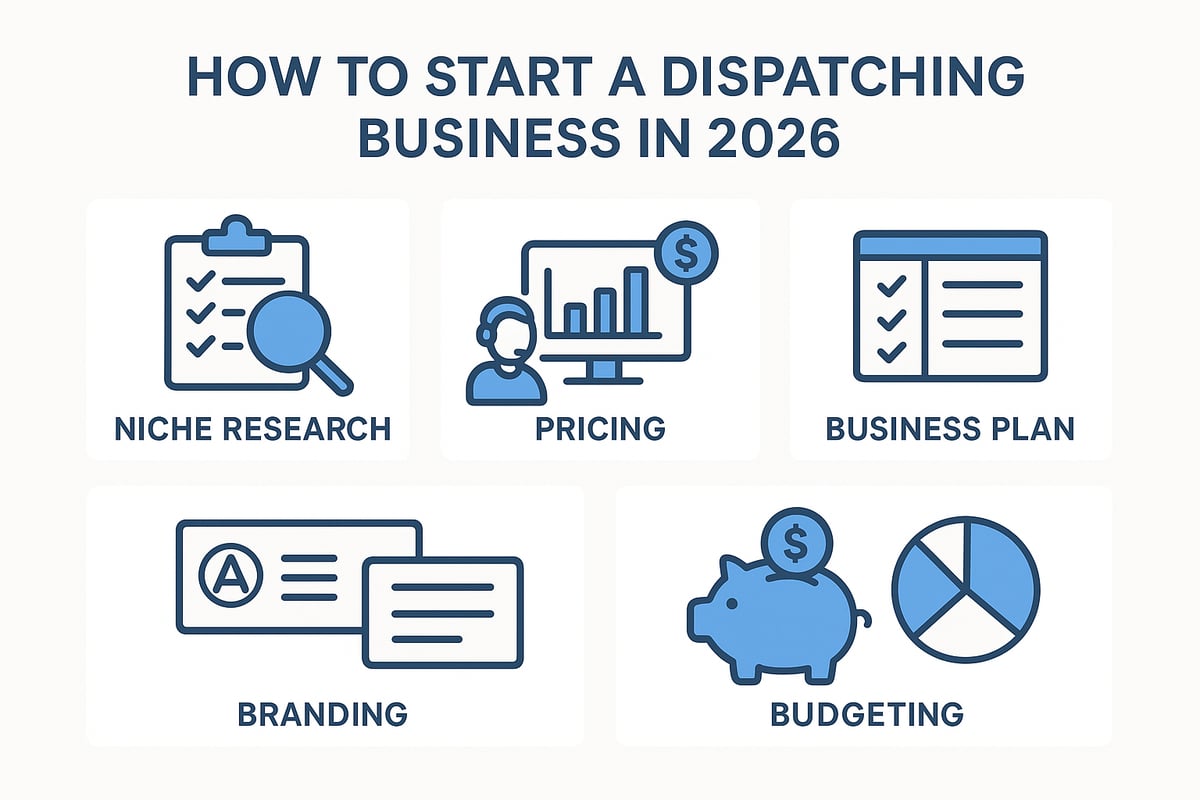
🔍 Begin by studying your local and national logistics landscape. Assess which services are in high demand and analyze competitors’ strengths and weaknesses. This insight helps you pinpoint where your dispatching business can offer unique value.
Explore specialized niches like reefer loads, hazmat, or box truck dispatching.
Use load board analytics and industry reports to spot profitable opportunities.
Conduct a SWOT analysis to evaluate your business idea.
Success often comes from targeting less saturated markets. For more foundational tips on how to start a dispatching business and other side hustles, visit this Starting a side hustle in 2026 guide.
Defining Your Service Offerings and Pricing
💼 Clearly outline your dispatching services. Core offerings typically include load booking, route planning, and compliance support. Enhance your value with add-ons like billing, paperwork handling, or 24/7 support.
Service Package Comparison:
Package | Services Included | Price Model |
|---|---|---|
Basic | Load booking, route planning | Flat fee |
Premium | All Basic + compliance, paperwork | % of load revenue |
Enterprise | All Premium + 24/7 support, billing | Retainer/monthly |
Benchmark your pricing against industry averages. Transparent pricing builds trust as you learn how to start a dispatching business that attracts loyal clients.
Creating a Business Plan and Setting Goals
📝 Draft a business plan that reflects your mission, vision, and values. Set both short-term and long-term goals to drive your dispatching venture forward.
Outline startup costs, revenue projections, and break-even points.
Use SMART goals for client acquisition and service milestones.
Plan for scalability and adaptability as the industry evolves.
A sample business plan template can help organize your ideas and keep your dispatching business strategy on track.
Choosing a Business Name and Branding
🎨 Select a memorable and relevant name that captures your business identity. Check for domain and trademark availability to ensure uniqueness.
Design a professional logo and cohesive brand identity.
Maintain consistency across your website, social media, and business documents.
Share your brand story to build credibility and trust.
Effective branding is a cornerstone of how to start a dispatching business that resonates in a competitive market.
Assessing Startup Costs and Funding Options
💰 Estimate your initial expenses, such as dispatch software, equipment, licensing, and marketing. Itemize your budget to avoid surprises and plan for a strong launch.
Startup Budget Example:
Expense | Estimated Cost |
|---|---|
Dispatch software | $100–$300/mo. |
Laptop/computer | $600–$1,200 |
Licensing/permits | $200–$800 |
Marketing | $300–$1,000 |
Consider funding sources like personal savings, loans, grants, or business partners. Bootstrapping can be effective for home-based operations. Always set aside a contingency fund to prepare for unexpected costs as you figure out how to start a dispatching business with confidence.
Step 2: Meeting Legal and Compliance Requirements
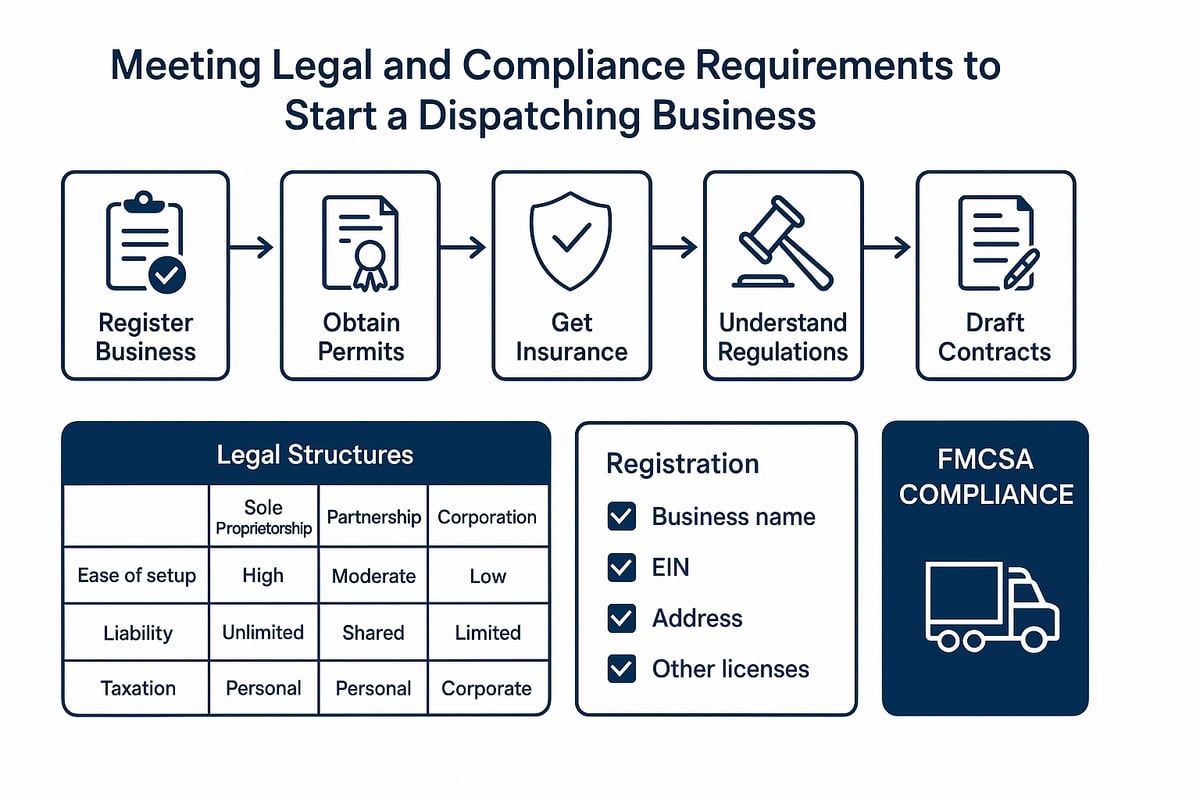
Navigating the legal landscape is a crucial part of how to start a dispatching business. Ensuring compliance protects your business, builds client trust, and lays a solid foundation for growth. Here is a step-by-step guide to meeting all legal requirements with confidence.
Registering Your Dispatching Business
Starting with the right legal structure is the first step in how to start a dispatching business. You can choose from several options, each with unique benefits and requirements.
Structure | Liability Protection | Cost | Registration Time |
|---|---|---|---|
Sole Proprietorship | None | Low | 1-2 days |
LLC | Yes | Moderate | 1-2 weeks |
Corporation | Yes | High | 2-4 weeks |
Checklist to Register:
Choose your business structure (LLC is popular for protection)
Register your business with your state
Apply for an EIN from the IRS
Check local requirements
Completing these steps forms the legal backbone for how to start a dispatching business. Consider consulting a business attorney to streamline the process.
Understanding Licensing and Permits
Licensing requirements vary by state and the services you offer. For most who want to know how to start a dispatching business, a general business license is mandatory. You may also need a home occupation permit for home-based operations.
Key Permits:
Business license from your city/county
Special permits for hazmat or medical dispatching
Home occupation permit (if applicable)
Penalties for missing permits can halt operations or result in fines. Always review your local government’s website, and set reminders to renew licenses annually. For specialized loads, double-check for additional permit requirements.
Insurance and Risk Management
Insurance is essential when considering how to start a dispatching business. It not only protects your assets but also reassures clients of your professionalism.
Types of Insurance:
General Liability (covers accidents or property damage)
Errors & Omissions (E&O) for professional mistakes
Cyber Liability (protects against data breaches)
Example: A dispatching business avoided a costly lawsuit with E&O insurance after a load was routed incorrectly. Bundling policies can save money and simplify renewals. Work with a broker to tailor coverage to your business risks.
Understanding Transportation Laws and Regulations
Compliance with transportation laws is non-negotiable for anyone learning how to start a dispatching business. The Federal Motor Carrier Safety Administration (FMCSA) sets rules for Hours of Service, safety, and documentation.
Stay updated on changes using official resources such as the FMCSA Hours of Service Final Rule.
Key Regulations:
Hours of Service (HOS) rules for drivers
DOT and FMCSA compliance for carriers
Interstate and cross-border requirements
Using compliance software and regular training will help you avoid costly mistakes and maintain your reputation as a responsible dispatcher.
Drafting Contracts and Service Agreements
Well-crafted contracts are vital for how to start a dispatching business. Clear agreements protect both you and your clients by defining expectations and responsibilities.
Key Clauses:
Scope of services
Fees and payment terms
Liability and termination terms
Sample Workflow:
Draft a contract using a template
Customize for each client
Use e-signature tools for fast, secure agreements
Store all contracts in a secure, digital location
Regularly review and update contracts as your business grows or regulations change.
Step 3: Setting Up Your Office, Tools, and Technology
Launching your operation with the right workspace, hardware, and software is crucial when learning how to start a dispatching business. This step ensures you can manage loads, communicate efficiently, and protect sensitive data from day one.
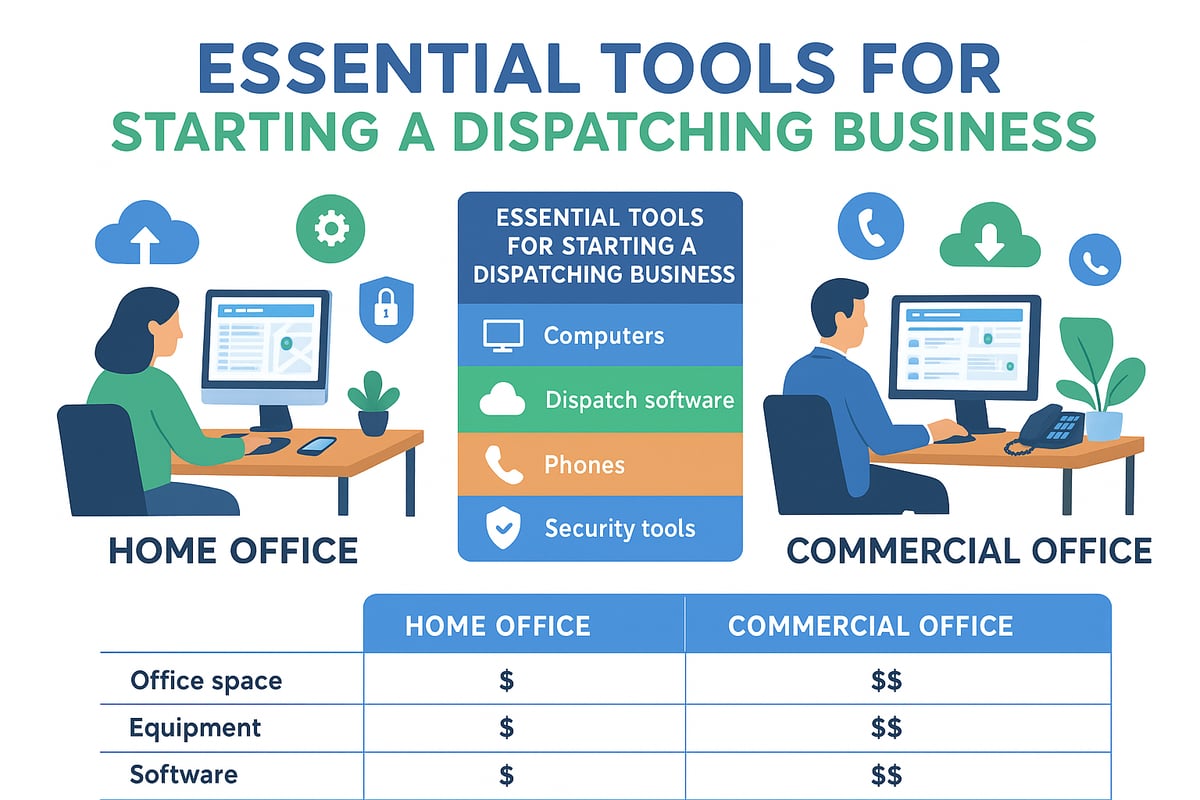
Choosing Your Office Setup: Home vs. Commercial
Deciding where to operate is a foundational choice for anyone researching how to start a dispatching business. Many new dispatchers launch from a home office, while others choose a commercial space for added professionalism.
🏡 Home Office:
Lower startup costs
Flexible hours
Minimal commute
🏢 Commercial Office:
Professional image
Room for team expansion
Higher expenses
Feature | Home Office | Commercial Office |
|---|---|---|
Startup Cost | Low | High |
Flexibility | High | Medium |
Scalability | Moderate | High |
Zoning Needed | Sometimes | Always |
Legal considerations include local zoning laws and insurance requirements. Use an ergonomic setup to boost productivity, and remember, you can start at home and scale up as your client base grows.
Essential Equipment and Hardware
Having the right gear is non-negotiable when you want to know how to start a dispatching business efficiently. Invest in reliable, up-to-date equipment to avoid workflow disruptions.
🖥️ Must-Have Gear:
Computer or laptop (8GB+ RAM, SSD, dual monitors)
High-speed internet (fiber or cable preferred)
Multi-line VOIP phone system
Printer and scanner for paperwork
External backup drive for data security
You can start with budget-friendly options and upgrade as revenue grows. Integrate mobile devices for on-the-go updates. Security is key, so use strong passwords and lock your workspace when away.
Dispatching Software and Load Boards
Technology is at the heart of how to start a dispatching business in 2026. Modern dispatchers rely on robust software and load boards to match loads, plan routes, and manage billing.
Top Features to Seek:
Real-time load matching
Automated billing and invoicing
Route optimization with AI
Compliance tracking
Software | Load Matching | Billing | Compliance | Cost |
|---|---|---|---|---|
Truckstop | ✅ | ✅ | ✅ | $$ |
DAT | ✅ | ✅ | ✅ | $$$ |
Free Options | Limited | ❌ | ❌ | Free |
With the digital logistics market expected to reach $154.92 billion by 2034, adopting modern platforms is not just smart—it is essential. Prioritize software that integrates with load boards and offers training for new users.
Communication and Collaboration Tools
Seamless communication is a pillar of how to start a dispatching business that stands out. Modern tools allow you to keep carriers and clients informed, collaborate remotely, and automate routine updates.
💬 Essential Tools:
Email and secure messaging (Slack, Teams)
Video conferencing (Zoom, Google Meet)
CRM for client management
E-signature platforms for contracts
Automate repetitive messages and use cloud storage for document sharing. A streamlined onboarding process with these tools helps you deliver a professional experience from day one.
Building a Secure and Efficient Workflow
Protecting data and creating a reliable workflow are critical for anyone learning how to start a dispatching business. Use clear SOPs, automation, and cybersecurity best practices to ensure efficiency and peace of mind.
🔐 Best Practices:
Use password managers and two-factor authentication
Automate billing and document workflows
Set up SOPs for all core tasks
Track productivity with workflow tools (Trello, Asana)
Continuously review and improve your processes. Investing in security and workflow management from the start builds trust and supports business growth.
Step 4: Launching and Growing Your Dispatching Service
Starting your dispatching business is just the beginning. To truly thrive in 2026, you need a strategic approach for building your network, marketing your services, leveraging industry communities, delivering outstanding customer service, and scaling up. This section guides you step by step on how to start a dispatching business and achieve sustainable growth.
Building Your Carrier and Client Network
Establishing a strong network is crucial when you’re learning how to start a dispatching business. Begin by identifying reliable carriers and shippers through outreach and vetting processes.
Attend industry events and join online logistics forums to meet potential partners.
Use referrals and cold calls to expand your network.
Verify carrier credentials and build trust with transparent onboarding.
Example onboarding steps:
Collect carrier documents and verify compliance.
Set clear expectations and communication protocols.
Use digital tools to streamline agreements.
Long-term relationships lead to repeat business and positive testimonials, both essential for growth.
Marketing Your Dispatching Business
Effective marketing is key to standing out when considering how to start a dispatching business. Start by building a professional website detailing your services and unique value.
Optimize your site for SEO to attract organic traffic.
Leverage social media platforms like LinkedIn and Facebook.
List your business on industry directories and load boards.
If you’re exploring dispatching as a side hustle or want to compare it with similar opportunities, check out the Best side hustles to make money for practical insights.
A consistent digital presence, combined with targeted advertising, will help generate leads and grow your client base.
Leveraging Online Communities and Industry Networks
Engaging with online communities is a strategic move for anyone researching how to start a dispatching business. Participate in logistics forums, Facebook groups, and LinkedIn communities.
Share expertise and answer questions to build authority.
Collaborate with other logistics professionals for referrals.
Join associations like TIA and NASTC to access exclusive resources.
Networking both online and at industry events allows you to monitor trends, discover new business opportunities, and stay ahead of the competition.
Providing Exceptional Customer Service
Delivering outstanding service is the backbone of how to start a dispatching business that thrives. Set clear expectations with clients from the beginning.
Communicate regularly and transparently.
Offer value-added support, such as 24/7 availability.
Use CRM tools to personalize service and track client preferences.
When disputes or complaints arise, resolve them quickly and professionally. Strong customer service builds your reputation and encourages repeat business.
Measuring Success and Scaling Up
Tracking performance is vital as you scale after figuring out how to start a dispatching business. Monitor key performance indicators (KPIs) such as:
KPI | Target | Notes |
|---|---|---|
Client Retention | 80%+ | Long-term partnerships |
Revenue Growth | 15% yearly | Increase service offerings |
On-Time Delivery | 95%+ | Maintain reliability |
As your operations grow, consider investing in advanced software, hiring staff, and expanding geographically. Continuous improvement and adaptability will help you build a sustainable, profitable business.
Step 5: Future-Proofing Your Dispatching Business for 2026 and Beyond
The logistics landscape is evolving rapidly, and future-proofing is now essential for anyone learning how to start a dispatching business. Staying ahead means embracing new technology, diversifying your revenue streams, managing risks, and sharpening your competitive edge. Let’s explore the key steps to ensure lasting success in 2026 and beyond.
Adapting to Technology and Industry Changes
🚀 The secret to mastering how to start a dispatching business is staying on top of tech trends. Automation, AI-driven route optimization, and cloud platforms are transforming daily operations.
Key steps:
Integrate AI tools for smarter load matching and route planning.
Use cloud-based dispatch software for flexibility and security.
Upskill regularly with online courses and certifications.
Partnering with tech providers and monitoring innovation keeps your business agile. For inspiration, check out these profitable automated business ideas that can elevate your dispatching operation. Staying tech-savvy is a must for long-term growth.
Diversifying Your Services and Revenue Streams
🌟 To future-proof how to start a dispatching business, look beyond basic load dispatching. Explore growing niches like medical courier, last-mile delivery, and Amazon Relay services.
Diversification strategies:
Offer consulting or dispatcher training.
Create digital products such as SOP templates or workflow guides.
Develop passive income streams through affiliate partnerships or digital tools.
A successful dispatcher in 2026 often expands into e-commerce logistics or partners with 3PLs. This flexibility cushions your business from market shifts and opens new profit channels.
Managing Risks and Ensuring Compliance
🛡️ Managing risk is crucial when considering how to start a dispatching business. Compliance with industry regulations, cybersecurity, and insurance reviews are non-negotiable.
Risk management checklist:
Schedule regular compliance audits and policy updates.
Invest in robust cybersecurity protocols and data privacy tools.
Review insurance coverage annually.
Stay updated on trends and regulatory changes by reviewing resources like the Transportation and Logistics Industry Trends February 2025. Proactive monitoring helps avoid costly fines and keeps your business resilient.
Staying Competitive in a Crowded Market
🎯 The market is more crowded than ever, so knowing how to start a dispatching business is just the beginning. Stand out by focusing on service quality, branding, and client feedback.
Ways to stay ahead:
Gather and act on client feedback regularly.
Showcase testimonials and case studies to build trust.
Invest in branding and process improvement.
Continuous learning, networking, and leveraging technology help you maintain a competitive edge. The most successful dispatchers are those who adapt quickly and deliver exceptional value in every client interaction.
Visual Resources, Templates & Further Learning
Unlocking success in how to start a dispatching business begins with the right resources at your fingertips. This section curates essential templates, tools, learning materials, and inspiring case studies to empower your journey with practical, professional-grade support.
Essential Templates and Checklists
Starting strong with how to start a dispatching business means having ready-to-use templates and checklists. These resources streamline setup and daily operations:
Business Plan Template
Sample Contracts & Service Agreements
Office Setup Checklist
Compliance & Registration Checklist
Customizable SOP Templates
Billing & Invoice Templates
For example, a downloadable compliance checklist ensures you never miss a legal requirement. Using these resources, you can move confidently from planning to execution, saving time and reducing errors.
Recommended Tools, Software, and Platforms
Leveraging technology is vital when learning how to start a dispatching business in 2026. The right tools optimize your workflow, automate routine tasks, and help you stay competitive.
Tool/Platform | Features | Pricing |
|---|---|---|
Truckstop | Load matching, compliance, billing | $$$ |
DAT Solutions | Real-time freight, analytics | $$ |
Slack/Zoom | Communication, video calls | Free/Paid |
QuickBooks | Accounting, invoicing | $$ |
Explore free trials and video walkthroughs to find your best fit. Integration tips and platform comparisons help you choose solutions that scale as your business grows.
Learning Resources and Industry Certifications
Education is the backbone of mastering how to start a dispatching business. Stay ahead with these valuable learning resources:
Online Courses & Certifications: TIA, FMCSA, Coursera
Recommended Books: “The Logistics Handbook,” “Dispatching for Profit”
Podcasts & Blogs: Industry experts, case studies
Webinars & Virtual Events: Real-time Q&A, trend updates
Mentorship Programs: One-on-one coaching
Video tutorials for beginners and ongoing education keep your skills sharp and help you adapt to new trends and regulations.
Inspiring Success Stories and Case Studies
Nothing motivates like real-world proof. Discover how others have succeeded in starting a dispatching business, and learn from their journeys:
Before-and-After Transformations: See the growth from startup to established service.
Earning Potential Case Study: Real numbers, real impact.
Lessons from Industry Veterans: Avoid common pitfalls.
Innovative Models: Niche dispatching, tech-driven expansion.
For more practical insights, check out How to make $500 a day with a pickup truck, which offers actionable advice for aspiring logistics entrepreneurs.
These stories fuel your ambition, showing what’s possible as you build your dispatching business.
You’ve just explored a step-by-step roadmap to starting your own dispatching business in 2026, from understanding the industry shifts to setting up efficient workflows and future proofing your services. If you’re excited to take the first real step toward building a flexible, profitable online income, you don’t have to do it alone. Join a community of side hustle builders who share honest advice, practical tools, and support for every stage of your journey. Ready to move from planning to action? Start Your First Hustle


