
The additive manufacturing revolution has created unprecedented opportunities for entrepreneurs looking to generate extra income from home. A 3d printing side hustle offers the perfect combination of creative freedom, scalability, and relatively low startup costs compared to traditional manufacturing businesses. With consumer-grade printers now available for under $300 and global demand for customized products growing exponentially, 2026 presents an ideal time to enter this market. Whether you're seeking a flexible side hustle or building toward full-time income, 3D printing provides multiple revenue streams that fit various skill levels and time commitments.
Understanding the 3D Printing Business Landscape
The 3D printing market has matured significantly over the past few years, creating clearer pathways to profitability for individual entrepreneurs. Understanding the current landscape helps you position your 3d printing side hustle for success.
Market Opportunities in 2026
The demand for personalized and custom-manufactured goods continues accelerating across multiple sectors. Small businesses need prototypes, consumers want unique home décor, and hobbyists seek specialized accessories unavailable through traditional retail channels.
Key growth sectors include:
- Custom gaming accessories and miniatures
- Personalized home organization solutions
- Replacement parts for appliances and electronics
- Educational tools and STEM learning materials
- Pet accessories and customized products
- Wedding favors and event decorations
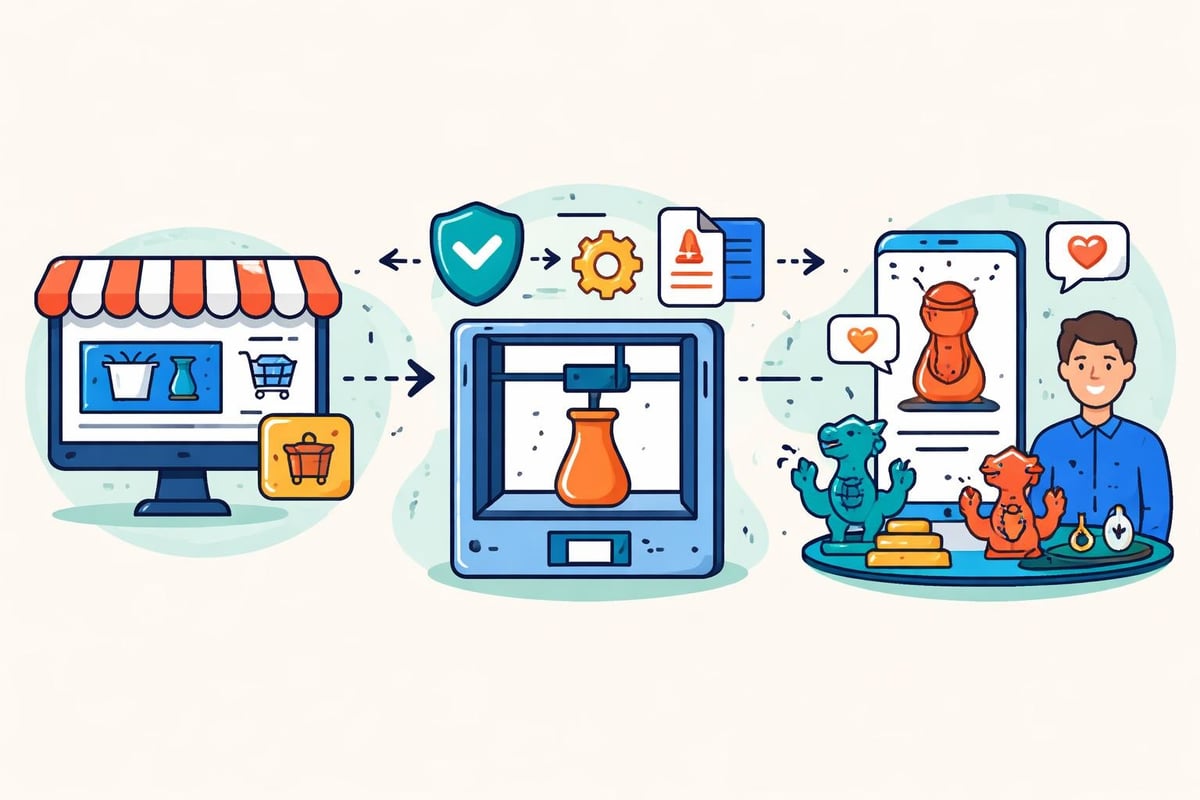
Recent marketplace changes have created new opportunities. While Etsy’s policy changes regarding 3D-printed products have restricted some sellers, alternative platforms like MyMiniFactory’s Premium Merchant Program offer new avenues for reaching customers.
Initial Investment Requirements
Starting a 3d printing side hustle requires less capital than most manufacturing ventures. Your investment scales with your ambitions and available resources.
| Investment Level | Equipment Cost | Monthly Materials | Total First Year |
|---|---|---|---|
| Starter | $200-$400 | $30-$50 | $560-$1,000 |
| Intermediate | $500-$1,200 | $75-$150 | $1,400-$3,000 |
| Professional | $1,500-$3,500 | $200-$400 | $3,900-$8,300 |
The starter level includes a basic FDM printer, initial filament supplies, and basic design software subscriptions. Most beginners find this sufficient for testing product ideas and building initial customer relationships.
Beyond equipment, factor in marketplace fees, packaging materials, and marketing costs. Many successful operators report breaking even within three to six months when focused on proven product categories.
Choosing Your Profit Path
A successful 3d printing side hustle requires selecting the right business model based on your skills, available time, and capital resources. Different approaches suit different entrepreneurs.
Product-Based Revenue Streams
Selling physical products represents the most direct path to revenue. This approach works well for those who enjoy product development and customer interaction.
High-demand product categories:
- Custom phone cases and tech accessories – Consistent demand with quick production times
- Miniatures for tabletop gaming – Dedicated customer base willing to pay premium prices
- Home organization solutions – Practical items with repeat customer potential
- Jewelry and fashion accessories – High margins on small material investments
- Plant pots and garden accessories – Seasonal opportunities with customization options
Product selection significantly impacts profitability. According to comprehensive market research on 3D printing business ideas, items requiring personalization command 40-60% higher prices than generic alternatives.
Service-Based Income Opportunities
Offering services rather than products creates different advantages. Services often command higher hourly rates and build deeper client relationships.
Profitable service offerings include:
- Rapid prototyping for local businesses and inventors
- Custom part replacement for discontinued products
- Educational workshops and training sessions
- Design consultation and file preparation
- On-demand printing for artists and designers
Service businesses benefit from recurring revenue through established client relationships. One operator reports earning $2,500 monthly providing prototyping services to three local product development companies alone.
Digital Product Sales
Creating and selling 3D model files generates passive income streams with minimal ongoing effort after initial creation. This approach suits designers comfortable with CAD software.
Platforms like Bambu Lab’s crowdfunding features on MakerWorld enable designers to fund complex projects while building audiences for future releases.
Essential Equipment and Skills
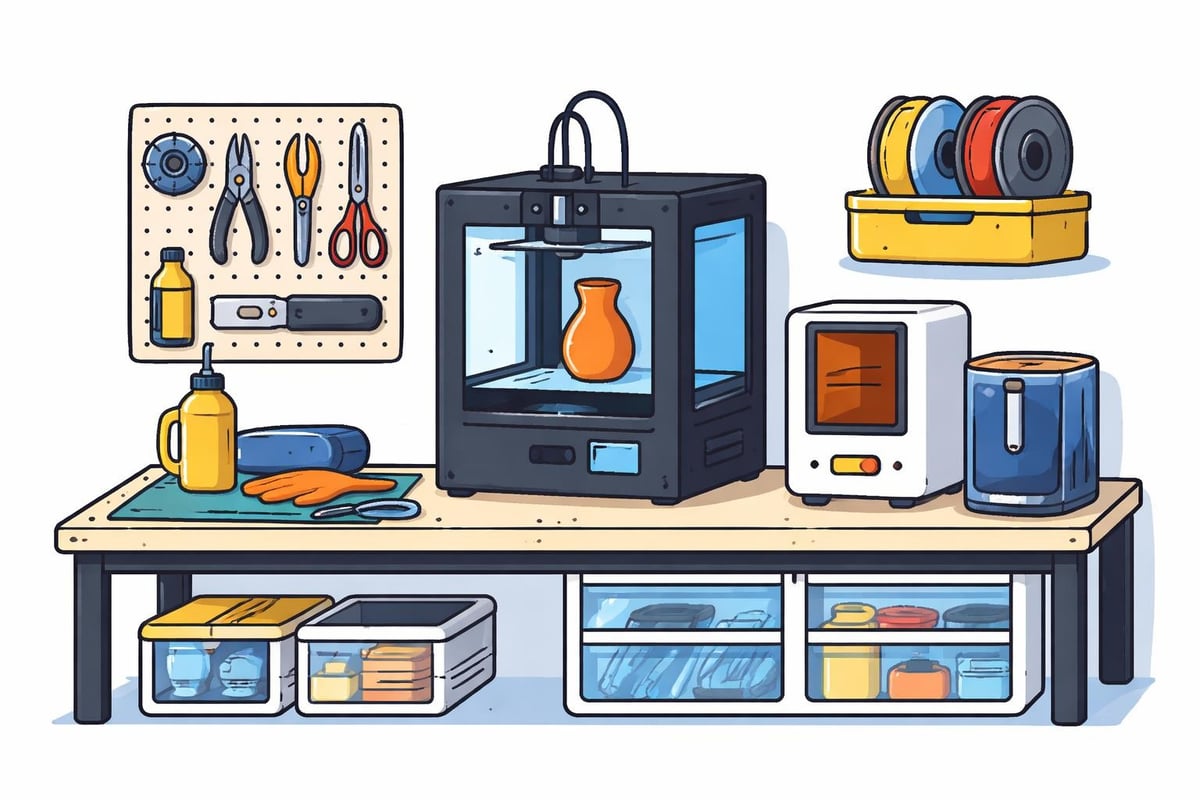
Launching your 3d printing side hustle requires understanding both the hardware and software components of successful operation. The right foundation prevents costly mistakes and accelerates your path to profitability.
Selecting Your First Printer
Printer selection dramatically impacts your product capabilities and operational efficiency. Focus on reliability and community support rather than cutting-edge features.
Beginner-friendly options for 2026:
| Printer Model | Price Range | Best For | Key Advantage |
|---|---|---|---|
| Entry FDM | $200-$400 | Learning basics | Low risk investment |
| Mid-range FDM | $400-$800 | Product sales | Reliability + speed |
| Resin Printer | $300-$600 | Detail work | Professional finish |
| Multi-material | $800-$1,500 | Versatility | Expanded options |
The beginner’s guide to 3D printers for side hustles emphasizes starting with proven models that have extensive online communities. When problems arise, accessible troubleshooting resources save hours of downtime.
Design Software Mastery
Creating original designs differentiates your 3d printing side hustle from competitors selling downloaded files. Even basic CAD skills unlock significant value.
Software progression path:
- Tinkercad – Free, browser-based, ideal for simple modifications
- Fusion 360 – Free for hobbyists, professional-grade parametric design
- Blender – Free, powerful for organic shapes and artistic pieces
- SolidWorks – Industry standard for mechanical parts (paid)
Most successful operators recommend investing 20-30 hours learning one program thoroughly rather than sampling multiple options superficially. This focused approach builds competence faster and produces marketable skills.
Similar to learning freelancing skills, design software proficiency develops through consistent practice on real projects rather than abstract tutorials.
Finding and Serving Customers
Building a customer base represents the biggest challenge for most operators starting a 3d printing side hustle. Strategic marketing and excellent service create sustainable growth.
Marketplace Strategies
Online marketplaces provide immediate access to customers actively seeking 3D-printed products. Each platform offers distinct advantages and limitations.
Platform comparison:
- Etsy – Large audience but restrictive policies on third-party designs
- MyMiniFactory – Specialized 3D printing community with fair seller terms
- eBay – Less competition in 3D printing category, broader audience
- Amazon Handmade – Premium positioning but higher competition
- Your own website – Maximum control, requires marketing investment
Successful sellers often maintain presence across multiple channels while focusing primary energy on one or two platforms. This diversification protects against policy changes while concentrating relationship-building efforts.
Local Business Opportunities
Geographic proximity creates unique advantages unavailable to online competitors. Local businesses value quick turnarounds and face-to-face consultations.
Promising local markets:
- Dental offices needing custom models
- Architecture firms requiring scale models
- Schools and libraries seeking educational materials
- Event planners wanting custom decorations
- Repair shops needing replacement parts
Approaching local businesses requires different strategies than online sales. Prepare a portfolio showcasing relevant work, offer trial projects at reduced rates, and emphasize convenience and customization advantages over mass-produced alternatives.
The approach mirrors techniques for finding freelance clients through targeted outreach and relationship building rather than mass advertising.
Building Repeat Business
Customer retention proves more profitable than constant acquisition. Repeat customers provide predictable revenue and valuable referrals.
Retention strategies include:
- Loyalty programs offering discounts on repeat orders
- Custom design services for established customers
- Seasonal product releases targeting existing buyers
- Educational content demonstrating new applications
- Responsive communication and quick problem resolution
One operator reports that 60% of monthly revenue comes from just 12 repeat customers, demonstrating the value of relationship-focused business development.
Pricing for Profit
Effective pricing separates profitable operations from struggling hobbyists. Your 3d printing side hustle must account for all costs while remaining competitive.
Cost Calculation Framework
Accurate cost tracking ensures sustainability and informs pricing decisions. Many beginners underestimate total production costs.
Cost components to track:
- Material costs – Filament or resin per gram plus waste factor
- Machine time – Equipment depreciation and electricity consumption
- Labor – Design time, printing supervision, post-processing
- Overhead – Marketplace fees, packaging, failed prints
- Marketing – Advertising, photography, sample products
Experienced operators recommend charging at minimum three times material costs for simple items, increasing to five-seven times for complex or customized products. This multiplier covers all expenses while generating profit.
Competitive Pricing Research
Understanding market rates prevents underpricing while identifying premium positioning opportunities. Research similar products across multiple platforms.
| Product Type | Market Low | Average | Premium |
|---|---|---|---|
| Phone case | $8-$12 | $15-$20 | $25-$35 |
| Gaming miniature | $5-$8 | $12-$18 | $22-$30 |
| Custom planter | $10-$15 | $20-$28 | $35-$50 |
| Replacement part | $12-$18 | $25-$35 | $45-$70 |
Premium pricing requires justification through superior design, faster delivery, better materials, or exceptional customer service. Position your offerings based on competitive advantages rather than competing solely on price.
Similar to pricing freelance services, value-based pricing often exceeds hourly rate calculations while better satisfying customers.
Scaling Your Operation
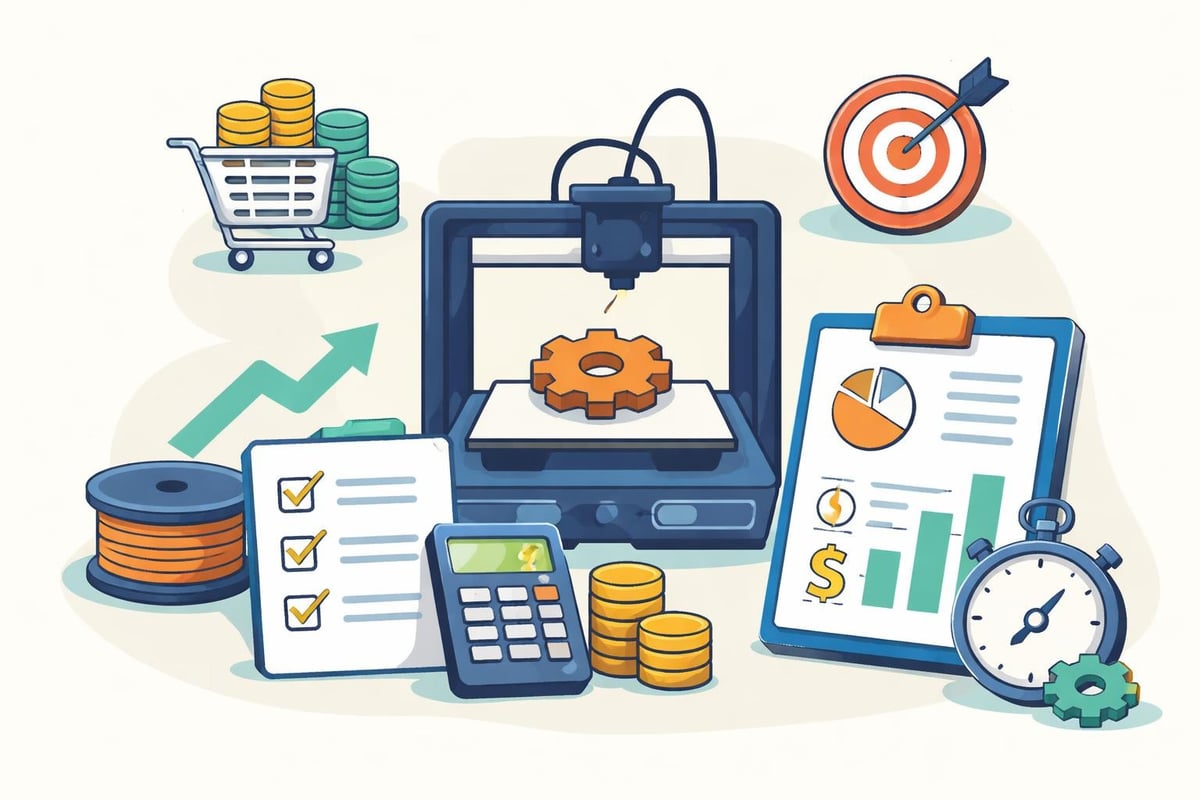
Growing your 3d printing side hustle from hobby income to substantial revenue requires systematic expansion. Strategic scaling maintains quality while increasing output.
Production Efficiency
Maximizing printer uptime and minimizing failed prints directly impacts profitability. Small efficiency improvements compound dramatically over time.
Optimization tactics:
- Batch similar items to reduce setup time
- Print overnight for continuous production
- Maintain detailed print profiles for common materials
- Stock backup parts to minimize downtime
- Implement quality control checklists
Operators running multiple printers report 30-40% higher effective output through strategic job scheduling compared to reactive, on-demand production approaches.
Equipment Expansion Decisions
Adding capacity requires careful timing and selection. Premature expansion strains finances while delayed growth limits revenue potential.
Expansion indicators:
- Consistent backlog of 7+ days
- Turning away profitable work regularly
- Operating current equipment 18+ hours daily
- Identified market segment requiring different capabilities
- Sufficient cash reserves covering 3 months expenses
Most successful operators recommend reaching consistent monthly revenue 3-4 times equipment cost before expansion. This conservative approach ensures demand sustainability and reduces risk.
Automation and Systems
Implementing systematic processes enables scaling beyond personal time constraints. Documentation transforms individual knowledge into transferable procedures.
Automating routine tasks through productivity tools frees time for high-value activities like design, marketing, and business development. Consider software for inventory management, order tracking, and customer communication as volume increases.
Real Income Potential
Understanding realistic earnings helps set appropriate expectations for your 3d printing side hustle. Income varies dramatically based on product selection, time investment, and business approach.
First-Year Revenue Projections
Most operators experience gradual revenue growth as skills improve and customer bases expand. Conservative projections prevent disappointment while aggressive goals drive action.
Typical progression:
- Months 1-3: $100-$400 monthly (learning phase)
- Months 4-6: $300-$800 monthly (establishing rhythm)
- Months 7-9: $600-$1,500 monthly (repeat customers)
- Months 10-12: $1,000-$2,500 monthly (optimized operations)
These ranges assume part-time commitment of 10-15 hours weekly. Full-time dedication potentially doubles these figures while requiring proportional expense increases.
According to comprehensive analysis of turning affordable printers into profit, strategic product selection and marketplace positioning significantly impact outcomes more than equipment quality alone.
Beyond Product Sales
Diversifying revenue sources creates stability and captures additional value from existing capabilities. Multiple income streams reduce vulnerability to market changes.
Additional revenue opportunities:
- Teaching workshops at libraries or community centers ($150-$300 per session)
- Consulting for businesses exploring 3D printing adoption ($75-$150 hourly)
- Affiliate income promoting materials and equipment ($50-$200 monthly)
- YouTube or blog content about techniques and reviews ($100-$500 monthly)
- Design file marketplaces providing passive income ($25-$300 monthly)
One operator reports earning $3,800 monthly with only $2,200 from direct product sales, demonstrating the value of diversified approaches. This multi-stream strategy mirrors successful remote side hustles that combine various income sources for stability.
Common Challenges and Solutions
Every 3d printing side hustle faces predictable obstacles. Preparation and proven solutions minimize disruptions and maintain profitability.
Technical Difficulties
Equipment failures and print quality issues frustrate beginners and experienced operators alike. Systematic troubleshooting reduces downtime.
Common problems and fixes:
| Issue | Typical Cause | Solution |
|---|---|---|
| Layer adhesion | Bed leveling/temperature | Recalibrate, adjust temps |
| Stringing | Retraction settings | Optimize retraction distance |
| Warping | Cooling/bed temp | Control environment, adjust temps |
| Failed prints | Multiple factors | Document settings, test systematically |
Maintaining detailed logs of successful print settings for each material and product type eliminates repetitive troubleshooting. This documentation becomes invaluable when scaling operations or training assistants.
Marketplace Competition
Standing out among thousands of sellers requires differentiation beyond price competition. Strategic positioning attracts ideal customers.
Differentiation strategies:
- Specialize in specific niches (gaming, organization, pets)
- Offer customization unavailable from competitors
- Provide exceptional photography and product descriptions
- Respond to inquiries within two hours
- Build portfolio showcasing unique capabilities
Research from detailed 3D printing business ideas analysis emphasizes that specialized positioning in underserved niches consistently outperforms generic approaches across broad categories.
Time Management
Balancing production, marketing, and customer service challenges operators transitioning from hobby to business. Structured scheduling maintains momentum.
Dedicate specific blocks for each business function rather than switching reactively between tasks. This focused approach increases productivity and reduces mental fatigue, similar to effective freelancing time management strategies.
Legal and Safety Considerations
Operating a legitimate 3d printing side hustle requires addressing regulatory and intellectual property concerns. Proper foundations prevent future complications.
Intellectual Property Rights
Respecting copyrights and trademarks protects your business from legal action while building sustainable practices. Original designs or licensed files provide safest foundation.
IP best practices:
- Create original designs whenever possible
- Purchase commercial licenses for files you sell
- Avoid trademarked characters and logos
- Document design sources for all products
- Respect attribution requirements for Creative Commons files
Marketplace policy changes, including those affecting Etsy sellers, increasingly emphasize original or properly licensed content. Building business around compliant practices creates long-term stability.
Business Structure and Taxes
Formalizing your operation provides legal protection and clarifies tax obligations. Requirements vary by location but follow common patterns.
Most operators begin as sole proprietors, transitioning to LLC formation after consistent monthly revenue exceeds $2,000-3,000. This progression balances simplicity with protection as stakes increase.
Track all income and expenses from day one, regardless of business structure. Quarterly estimated tax payments prevent year-end surprises for profitable operations. Consider consulting with tax professionals familiar with small manufacturing businesses for specific guidance.
Safety Protocols
3D printing involves heated components, moving parts, and material fumes requiring proper precautions. Basic safety measures protect health and property.
Essential safety practices:
- Operate printers in ventilated areas away from living spaces
- Never leave heating printers completely unattended
- Keep fire extinguisher accessible to printing area
- Store materials properly away from heat and moisture
- Wear appropriate protection during post-processing
Material safety data sheets (MSDS) for your filaments and resins provide specific handling guidance. Review these documents and implement recommended precautions for each material type.
Starting a 3d printing side hustle combines creative satisfaction with genuine income potential when approached strategically. Success requires balancing technical skills, business fundamentals, and customer service while maintaining realistic expectations about timeline and effort investment. Whether you're exploring easy online jobs for beginners or ready to invest in equipment and skills, 3D printing offers scalable opportunities matching various commitment levels. Side Hustle Hackers provides the practical resources, honest reviews, and community support to help you navigate these opportunities and build sustainable income streams that fit your goals and lifestyle.


