

If you’re looking for a flexible way to earn extra cash from home, becoming a PingPong tester might be exactly what you need. This relatively unknown side hustle lets you get paid to test websites, apps, and digital products while sharing your honest feedback. It’s perfect for anyone who wants to make money on their own schedule without needing special skills or expensive equipment. In this guide, we’ll walk you through everything you need to know about this opportunity, from how much you can realistically earn to what companies are actually hiring testers right now.
What Exactly Is a PingPong Tester?
A PingPong tester is someone who gets paid to test digital products, websites, and applications for companies looking to improve their user experience. The term comes from PingPong, a comprehensive remote UX research platform that connects businesses with real users who can provide valuable feedback.
Unlike traditional software testing that requires technical knowledge, being a PingPong tester is all about your natural reactions and observations. Companies want to know how everyday people interact with their products.
The Core Responsibilities
When you work as a PingPong tester, you’re essentially becoming the eyes and ears of product development teams. Here’s what you’ll typically do:
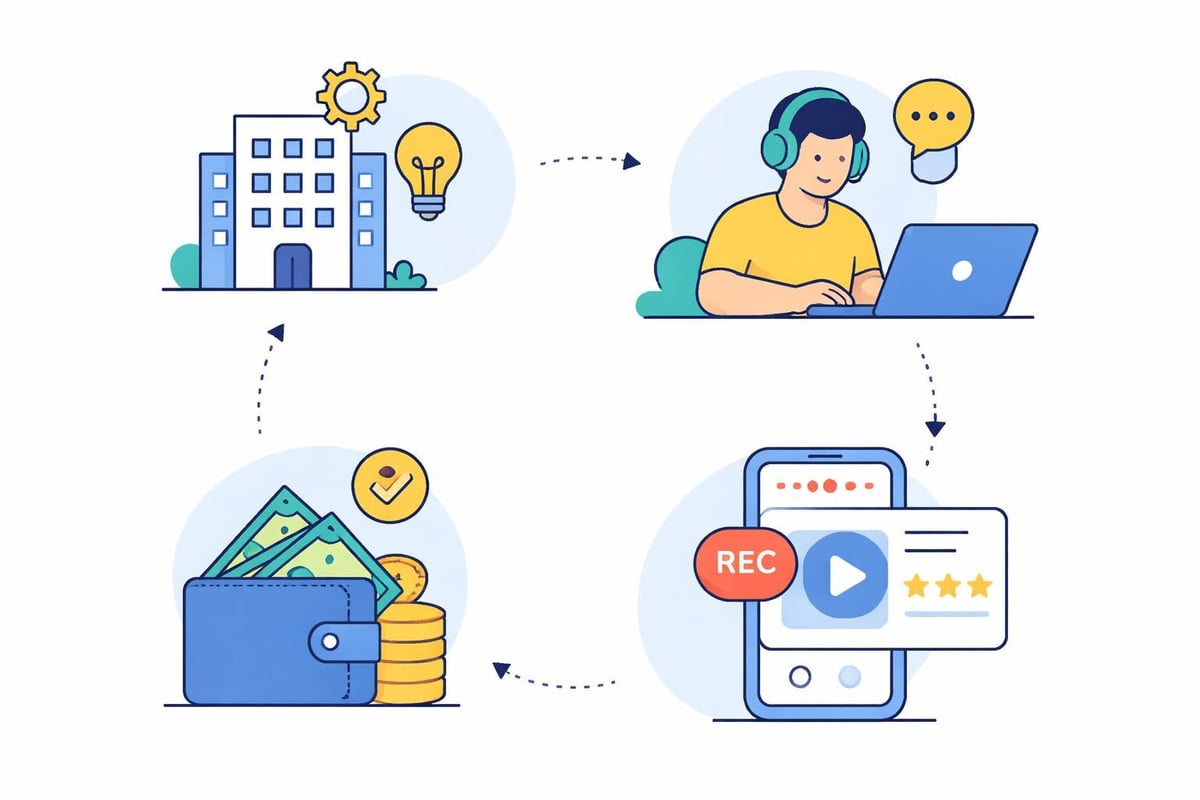
Navigate through websites or apps while recording your screen
Speak your thoughts aloud as you complete specific tasks
Answer questions about your experience
Identify confusing elements or bugs you encounter
Provide honest feedback about design and functionality
The beauty of this work is that companies don’t want experts. They want regular people who represent their actual customer base. That’s probably you.
How Much Can You Actually Earn as a PingPong Tester?
Let’s talk numbers, because that’s what really matters when you’re exploring technology side hustles. According to Side Husl’s review of PingPong, testers can expect varying pay depending on the complexity and length of each test.
Payment Structure Breakdown
Test Type | Duration | Typical Pay | Frequency |
|---|---|---|---|
Quick surveys | 5-10 minutes | $3-$5 | Daily |
Standard website tests | 15-20 minutes | $10-$15 | 2-3 per week |
Moderated interviews | 30-60 minutes | $50-$100 | Weekly |
Mobile app testing | 20-30 minutes | $15-$25 | Weekly |
The reality is that you’re not going to replace your full-time income doing this. But if you’re consistent and sign up for multiple platforms, you could realistically pull in $200-$500 per month working just a few hours each week.
Some testers report earning more during peak seasons when companies are launching new products or doing major website redesigns. The key is being available when tests come in and responding quickly.
Getting Started: What You’ll Need
The barrier to entry for becoming a PingPong tester is refreshingly low. You probably already have everything you need sitting in your home right now.
Essential Equipment and Requirements
Hardware requirements:
A computer (desktop or laptop) with a working microphone
Reliable internet connection (minimum 5 Mbps download speed)
Optional: smartphone or tablet for mobile testing opportunities
Software needs:
Updated web browser (Chrome, Firefox, Safari)
Screen recording software (usually provided by the platform)
Working speakers or headphones
Personal qualifications:
Clear speaking voice
Ability to articulate your thoughts while navigating
Basic computer literacy
18 years or older (most platforms)
You don’t need any special certifications, degrees, or previous experience. If you can browse the internet and talk about what you’re doing, you’re qualified.
Top Platforms to Find PingPong Testing Work
While PingPong itself is one option, diversifying across multiple platforms increases your earning potential. Here are the most reliable ones to consider in 2026:
Platform Comparison
UserTesting – The industry leader with the most test availability
TryMyUI – Known for slightly higher pay rates
Userlytics – Offers both desktop and mobile testing
TestingTime – Specializes in moderated sessions with higher pay
PingPong – Growing platform with focus on UX research
The smart strategy is signing up for at least three platforms. This way, when one is slow, you’ve got other options to fill your testing schedule.
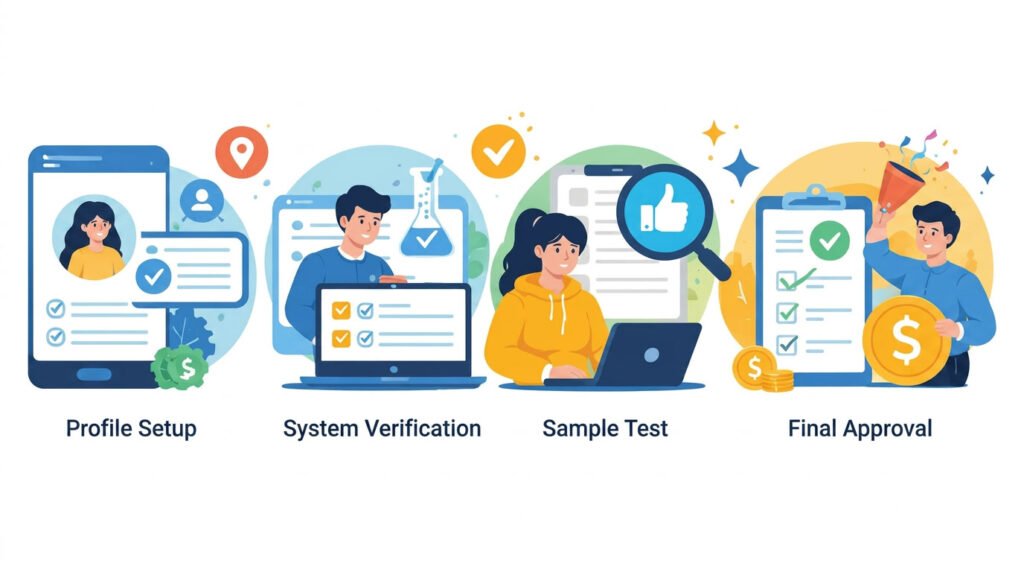
Most platforms have a similar application process. You’ll create a profile, complete a sample test to demonstrate your abilities, and then wait for approval. This usually takes 1-3 business days.
Maximizing Your Earnings: Pro Tips from Experienced Testers
After talking with people who’ve been doing this for years, I’ve gathered some insider strategies that separate occasional testers from consistent earners.
Availability Is Everything
Tests get assigned on a first-come, first-served basis. Set up notifications on your phone and computer so you know immediately when a new test drops. The best testers check their dashboards at least 3-4 times daily.
Peak availability windows:
Monday mornings (8-10 AM EST)
Wednesday afternoons (1-3 PM EST)
Thursday mornings (9-11 AM EST)
Companies tend to release tests during business hours when their teams are available to review feedback quickly.
Quality Over Quantity
It’s tempting to rush through tests to do more of them, but platforms track your quality scores. High-quality testers who provide detailed, thoughtful feedback get invited to more tests and higher-paying opportunities.
Speak clearly and continuously
Point out specific issues with detailed explanations
Complete all tasks thoroughly
Submit tests that meet the minimum time requirements
Follow all instructions precisely
One tester I spoke with mentioned getting banned from a platform for repeatedly submitting low-effort tests. Don’t let that be you.
Build a Complete Profile
The more demographic information you provide, the more test opportunities you’ll receive. Companies look for specific user profiles, so being thorough helps you match more criteria.
Fill out everything:
Age, gender, location
Education level
Occupation and industry
Income range
Hobbies and interests
Tech proficiency level
Languages spoken
Common Challenges and How to Overcome Them
Like any side hustle, being a PingPong tester comes with its own set of frustrations. Here’s what to expect and how to handle it.
Inconsistent Test Flow
Some weeks you’ll get five tests, other weeks you’ll get none. This inconsistency is the biggest complaint among testers.
Solution: Diversify across multiple platforms and treat this as supplemental income, not primary income. Consider pairing it with other flexible gig work to create more stable earnings.
Technical Difficulties
Screen recording software can be finicky, and nothing’s more frustrating than completing a 20-minute test only to have it fail to upload.
Solution: Always do a quick tech check before starting. Close unnecessary programs, ensure your microphone works, and verify your internet connection is stable. Some testers keep a backup recording app running just in case.
Qualification Screeners
You’ll often start a test only to be screened out after answering demographic questions. This wastes time without any compensation.
Solution: Accept this as part of the process. Most platforms don’t pay for screener-outs, but getting frustrated won’t help. The more screeners you complete, the better platforms understand your profile for future matching.
Is Being a PingPong Tester Worth It in 2026?
Let’s be real for a minute. This isn’t going to make you rich, and it’s not going to replace your day job. But for the right person, it’s a legitimately solid side hustle.
Who This Works Best For
Best Fit | Not Ideal For |
|---|---|
Students with flexible schedules | People needing consistent full-time income |
Stay-at-home parents | Those with unreliable internet |
Remote workers wanting extra cash | Anyone uncomfortable speaking thoughts aloud |
Early retirees | People seeking quick overnight riches |
Anyone with spare time | Those needing immediate payment |
The payment processing time varies by platform. Most pay within 7-14 days via PayPal, which is important to know if you need money urgently. If you’re looking for side hustles that pay faster, you might want to combine this with more immediate-pay options.
The Honest Pros and Cons
Advantages:
Work from absolutely anywhere with internet
Zero commute or dress code
Interesting variety of products to test
Legitimate companies with real payments
Flexible scheduling on your terms
Low barrier to entry
Drawbacks:
Unpredictable test availability
Relatively low hourly rate compared to skilled work
Can become repetitive over time
Payment delays of 1-2 weeks
No employee benefits or protections
Need to manage self-employment taxes
Advanced Strategies: Moving Beyond Basic Testing
Once you’ve established yourself as a reliable tester, opportunities for higher-paying work open up. Here’s how to level up your PingPong tester career.
Pursuing Moderated Sessions
Moderated sessions involve live video calls with researchers where you complete tasks while they observe and ask follow-up questions. These typically pay $50-$100 for 30-60 minutes of work.
To get invited to moderated sessions:
Maintain a 5-star rating on standard tests
Complete your profile thoroughly with professional details
Be available during business hours when researchers schedule sessions
Invest in better equipment like a quality webcam and microphone
Practice articulating your thoughts clearly and professionally
Specializing in Niche Testing
Some testers build expertise in specific areas like healthcare apps, financial software, or e-commerce platforms. This specialization makes you more valuable for tests requiring domain knowledge.

Understanding the Technical Side: How PingPong Testing Actually Works
For those curious about what happens behind the scenes, the technology is pretty straightforward but worth understanding.
When you accept a test, you’re usually directed to install screen recording software that captures everything you do. Some platforms like PingPong use sophisticated systems including geolocation APIs to match testers with relevant studies based on location and demographics.
The software typically records:
Your screen activity
Mouse movements and clicks
Your verbal commentary
Timing data for each task
Form submissions and navigation paths
All this data gets compiled and sent to researchers who analyze patterns across multiple testers. Your individual feedback combines with dozens of others to help companies make informed design decisions.
It’s worth noting that different types of testing tools exist. For example, PingTester is a network testing tool for IT professionals, which is completely different from user experience testing. Don’t confuse the two when researching opportunities.
Tax Considerations and Legal Stuff You Should Know
Since you’re working as an independent contractor, understanding the tax implications is crucial. Nobody wants a surprise tax bill next April.
What You Need to Track
Keep detailed records of:
All payments received from testing platforms
Equipment purchases related to testing work
Internet costs (proportional to testing time)
Any software subscriptions required for testing
You’ll receive 1099 forms from platforms that pay you more than $600 in a calendar year. Even if you don’t hit that threshold with individual platforms, you’re still legally required to report all income.
Quarterly Tax Payments
If you’re earning consistently, consider making quarterly estimated tax payments to avoid penalties. Most testers who make this a regular side income should set aside about 25-30% of earnings for taxes.
This applies to many freelance and gig work opportunities, not just testing. Getting comfortable with these basics now will serve you well as you explore other income streams.
Combining PingPong Testing with Other Side Hustles
The beauty of this work is how well it complements other flexible income sources. Since tests come sporadically, you’ve got plenty of time to pursue additional opportunities.
Compatible Side Hustles
Smart combinations include:
Freelance writing or design during predictable work hours
Online tutoring scheduled around your availability
Passive income projects like creating digital products
Other testing platforms to maximize coverage
Survey sites for quick earnings between tests
Many successful side hustlers I’ve talked to use testing as their “filler” work, something they do between higher-paying projects or during downtime. It’s perfect for this role because it requires minimal mental commitment and can be done in short bursts.
Check out other proven side hustle opportunities that pair well with testing work to build a diversified income portfolio.
Real Stories from Active PingPong Testers
I reached out to several active testers to get their honest perspectives on this work. Here’s what they shared.
Maria, 34, stay-at-home mom: “I make about $300 monthly doing tests during my kids’ nap time and after bedtime. It’s not life-changing money, but it covers our family’s streaming subscriptions and helps with groceries. The flexibility is what makes it work for me.”
James, 28, remote software developer: “I do this during my lunch breaks and random downtime. It keeps me connected to UX work, which interests me professionally, while earning a bit extra. I average maybe $150-$200 monthly without really trying.”
Lisa, 62, recent retiree: “This gives me something productive to do and keeps me engaged with technology. I probably earn $100-$150 monthly, but honestly, I’d almost do it for free. The extra money just makes it better.”
The common thread? Everyone treats it as supplemental income, not a primary source. Those expectations seem to lead to the most satisfaction.
Future Outlook: Is PingPong Testing Growing or Dying?
With AI and automation advancing rapidly, you might wonder if this opportunity will still exist in a few years. The good news is that human testing remains irreplaceable for understanding actual user experience.
Why This Side Hustle Has Staying Power
Companies will always need to understand how real humans interact with their products. While AI can analyze data patterns, it can’t replicate the authentic confusion, delight, or frustration that human testers provide.
In fact, as more companies embrace remote-first approaches and digital products proliferate, the demand for remote user testing is likely to increase rather than decrease. The platforms that facilitate this work continue to grow and expand their testing panels.
Emerging Opportunities
Watch for these trends in 2026 and beyond:
VR and AR testing as these technologies become mainstream
Voice interface testing for smart home devices and assistants
Accessibility testing as companies prioritize inclusive design
AI product testing where humans evaluate AI-generated content and features
Cross-cultural testing for global product launches
Testers who position themselves early in these emerging areas could command premium rates.
Making Your Decision: Should You Become a PingPong Tester?
After covering all the details, you’ve got enough information to make an informed decision. Here’s how to think about whether this side hustle makes sense for you.
The Three-Question Test
Ask yourself these questions:
Do I have 3-5 hours weekly that I could dedicate to this work? If you’re already maxed out time-wise, adding this won’t work well.
Am I comfortable with variable income between $50-$150 monthly to start? Setting realistic expectations prevents disappointment.
Can I articulate my thoughts clearly while performing tasks? If talking while working feels awkward, this might not be your thing.
If you answered yes to all three, becoming a PingPong tester is probably worth trying. The startup costs are essentially zero, so you’re only investing your time to find out if it works for you.
Your First Steps
Ready to get started? Here’s your action plan:
Sign up for 2-3 platforms this week (UserTesting, TryMyUI, and one other)
Complete your profiles thoroughly with accurate demographic information
Pass the sample tests by following instructions carefully and speaking clearly
Set up payment accounts (usually PayPal) before you need them
Enable notifications so you don’t miss test opportunities
Track your time and earnings for the first month to evaluate if it’s worthwhile
Give it at least 30 days before deciding if it’s right for you. The first week or two might be slow as platforms learn your profile and you learn the ropes.
Becoming a PingPong won’t replace your day job, but it’s a legitimate way to earn a few hundred dollars monthly with minimal commitment and maximum flexibility. The key is treating it as one piece of a diversified income strategy rather than relying on it entirely. If you’re ready to explore this and other proven income opportunities, Side Hustle Hackers offers the honest reviews, practical guides, and community support you need to build real online income that fits your life and schedule.


