

The demand for professional knife sharpening services continues to grow as both home cooks and commercial kitchens recognize the value of maintaining sharp, efficient blades. Starting a knife sharpening business offers entrepreneurs a low-overhead opportunity with flexible scheduling, minimal startup costs, and multiple revenue streams. This service-based venture requires specialized skills that can be learned relatively quickly, making it an attractive option for anyone seeking to explore online jobs and flexible income opportunities. Whether you operate as a mobile service, establish a fixed location, or combine both approaches, the knife sharpening business model provides consistent demand from restaurants, butcher shops, salons, landscaping companies, and residential customers who value precision tools.
Why the Knife Sharpening Business Is Growing in 2026
The U.S. knife sharpening service market is experiencing substantial growth, with projections showing the industry will reach $117.1 million by 2028, expanding at a compound annual growth rate of 6.5%. This expansion stems from several key factors that make now an ideal time to enter this market.
Key Market Drivers:
- Rising number of restaurants, cafes, and food service establishments
- Increased awareness about kitchen safety and efficiency
- Growing preference for maintaining quality tools rather than replacing them
- Expansion of professional grooming services requiring sharp scissors and clippers
- Sustainability trends encouraging tool maintenance over disposal
Commercial kitchens represent a particularly lucrative segment, as professional chefs understand that sharp knives improve food preparation efficiency, reduce injury risk, and produce superior cutting results. According to comprehensive guides on knife maintenance, dull blades force workers to apply excessive pressure, increasing accident potential and slowing productivity.
Service Demand Across Multiple Industries
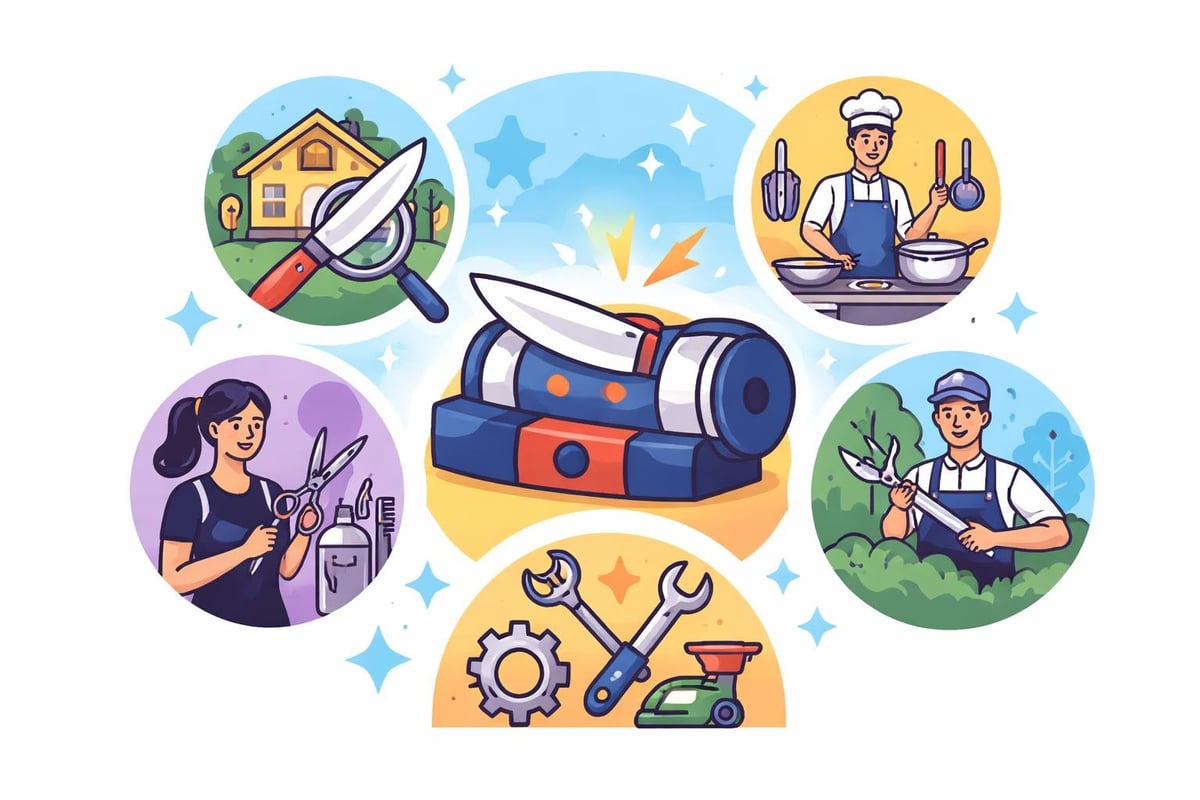
A successful knife sharpening business serves diverse client categories, each with distinct needs and payment cycles. Restaurants typically require weekly or biweekly service, creating predictable recurring revenue. Hair salons need monthly sharpening for scissors and shears, while landscaping companies seek seasonal blade maintenance for mowers and pruning tools.
| Client Type | Service Frequency | Average Ticket | Volume Potential |
|---|---|---|---|
| Restaurants | Weekly/Biweekly | $50-$150 | High |
| Butcher Shops | Weekly | $75-$200 | Medium |
| Hair Salons | Monthly | $30-$80 | High |
| Residential | As Needed | $25-$60 | Very High |
| Landscaping | Seasonal | $100-$300 | Medium |
This diversity creates stability, as you're not dependent on a single customer segment. When restaurant business slows seasonally, residential customers preparing for holiday cooking often increase. Landscaping companies ramp up in spring and summer, offsetting potential winter slowdowns in other sectors.
Starting Your Knife Sharpening Business: Essential Steps
Launching a knife sharpening business requires less capital than most service ventures, with startup costs ranging from $2,000 to $10,000 depending on your chosen business model and equipment quality. The barrier to entry remains relatively low compared to other freelancing niches and service businesses.
Acquiring the Necessary Skills
Professional sharpening expertise can be developed through multiple learning pathways. Many successful operators begin by studying comprehensive sharpening techniques that cover different blade types, angles, and methods. Online courses, YouTube tutorials, and manufacturer training programs provide foundational knowledge.
Consider investing in resources like specialized audiobooks on starting a knife sharpening business that cover everything from technical skills to business operations. Practice extensively on inexpensive knives before working with customer blades, developing muscle memory for maintaining consistent angles and pressure.
Skills to Master:
- Identifying different blade types and their optimal sharpening angles
- Using whetstones, electric grinders, and belt sharpeners effectively
- Assessing blade damage and determining repair feasibility
- Understanding metallurgy basics for various steel types
- Recognizing when blades need thinning versus simple edge maintenance
Equipment Investment and Setup
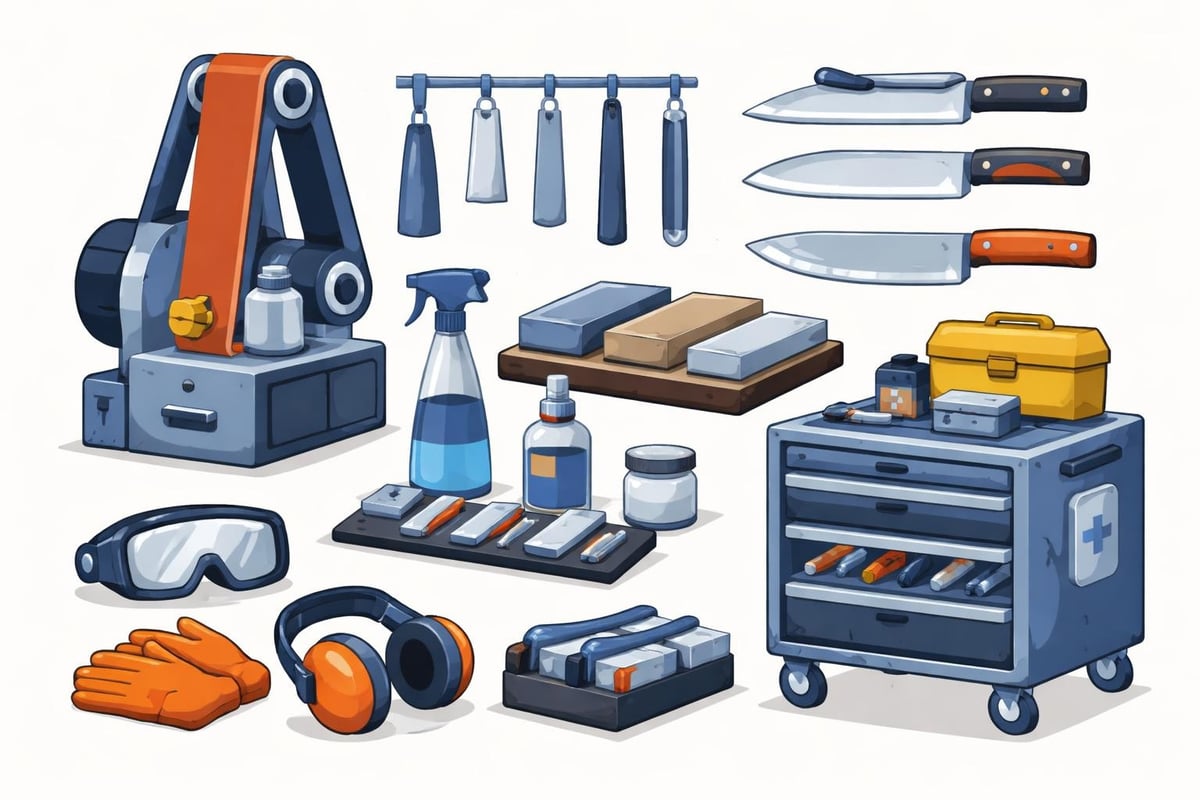
Your equipment selection directly impacts service quality, speed, and the range of items you can sharpen. Most professionals use a combination of tools to handle different blade types and customer preferences.
Essential Equipment List:
- Belt grinder or sharpening system ($500-$3,000)
- Whetstones in various grits ($100-$300)
- Honing rods and leather strops ($50-$150)
- Safety equipment including gloves and eye protection ($50-$100)
- Magnification tools for inspecting edges ($30-$100)
- Transport containers and organization systems ($100-$300)
Mobile operators need additional investment in vehicle organization, signage, and portable power solutions if using electric equipment. A well-organized van or truck setup allows you to service customers at their locations, commanding premium prices for convenience.
Business Models and Revenue Strategies
The knife sharpening business offers flexible operational models that accommodate different lifestyle preferences, capital availability, and growth ambitions. Your chosen approach influences overhead costs, pricing structure, and customer acquisition strategies.
Mobile Service Operations
Mobile knife sharpening represents the most popular entry point, requiring minimal overhead while maximizing flexibility. Operators visit customer locations on scheduled routes, sharpening knives on-site or collecting them for later return.
Mobile Service Advantages:
- Low overhead without rent or utility costs
- Ability to serve wide geographic areas
- Premium pricing for convenience
- Flexible scheduling around other commitments
- Easy scalability by adding service days
Route efficiency becomes crucial for profitability. Successful mobile operators cluster customers geographically, scheduling multiple stops in the same neighborhood or commercial district on specific days. This approach minimizes drive time while maximizing billable hours.
Fixed Location and Drop-Off Services
Establishing a storefront or workshop provides visibility and allows customers to drop off items for later pickup. This model works particularly well in high-traffic retail areas or when combined with complementary services like knife sales, cooking classes, or tool repair.
The fixed location model requires higher initial investment but can generate stronger customer loyalty and higher volume. You can also offer specialized services like knife restoration, custom blade work, or engraving that command premium prices.
| Business Model | Startup Cost | Overhead | Flexibility | Growth Potential |
|---|---|---|---|---|
| Mobile Only | $2,000-$5,000 | Very Low | High | Medium |
| Fixed Location | $8,000-$15,000 | High | Low | Very High |
| Hybrid Model | $6,000-$12,000 | Medium | Medium | High |
| Mail-In Service | $3,000-$7,000 | Low | Very High | Medium |
Pricing Your Services Competitively
Pricing strategy balances competitive positioning with profitability. Research local competitors, but also consider your service quality, convenience factor, and turnaround time. Learning how to price your freelance services provides valuable insights applicable to service-based businesses.
Common Pricing Structures:
- Per-knife pricing: $5-$10 per standard knife, $8-$15 for specialty blades
- Bulk discounts: Set pricing for commercial accounts (10+ knives)
- Minimum service fees: $25-$40 for mobile visits
- Specialty items: $15-$30 for scissors, $20-$50 for expensive Japanese knives
- Rush service premiums: 50-100% upcharge for same-day service
Monthly subscription packages for commercial accounts create predictable revenue while ensuring customer retention. A restaurant package might include weekly visits with unlimited sharpening for a flat monthly fee, simplifying budgeting for both parties.
Marketing Your Knife Sharpening Business
Effective marketing combines traditional community engagement with digital strategies to build a steady customer pipeline. Unlike purely online businesses, knife sharpening benefits from strong local presence and word-of-mouth referrals.
Building Your Commercial Client Base
Commercial accounts provide the foundation for sustainable revenue. A single restaurant client generating $100-$200 monthly creates $1,200-$2,400 annual recurring revenue. Prioritize these relationships through direct outreach and exceptional service.
Commercial Client Acquisition Tactics:
- Direct visits to restaurants during slow afternoon hours
- Free initial sharpening demonstrations for decision-makers
- Referral incentives for existing commercial clients
- Partnerships with restaurant supply companies
- Attendance at culinary and food service industry events
Focus on reliability and consistency. Commercial kitchens operate on tight schedules, so punctuality and quality consistency matter more than rock-bottom pricing. One late or substandard service can cost you an account that took months to secure.
Reaching Residential Customers
Residential customers provide volume and diversity, though individual ticket sizes remain smaller. Many successful operators build routes where they visit neighborhoods on specific days, encouraging residents to flag them down or schedule appointments.
Digital marketing plays a crucial role in residential customer acquisition. A professional website with service area information, online booking, and before/after photos builds credibility. Local SEO optimization ensures you appear when people search for "knife sharpening near me" or similar terms.
Social media platforms, particularly Facebook and Instagram, allow you to showcase transformation photos, share knife care tips, and engage with your community. Consider creating educational content about knife maintenance, safety, and proper usage to position yourself as the local expert.
Strategic Partnerships and Referrals
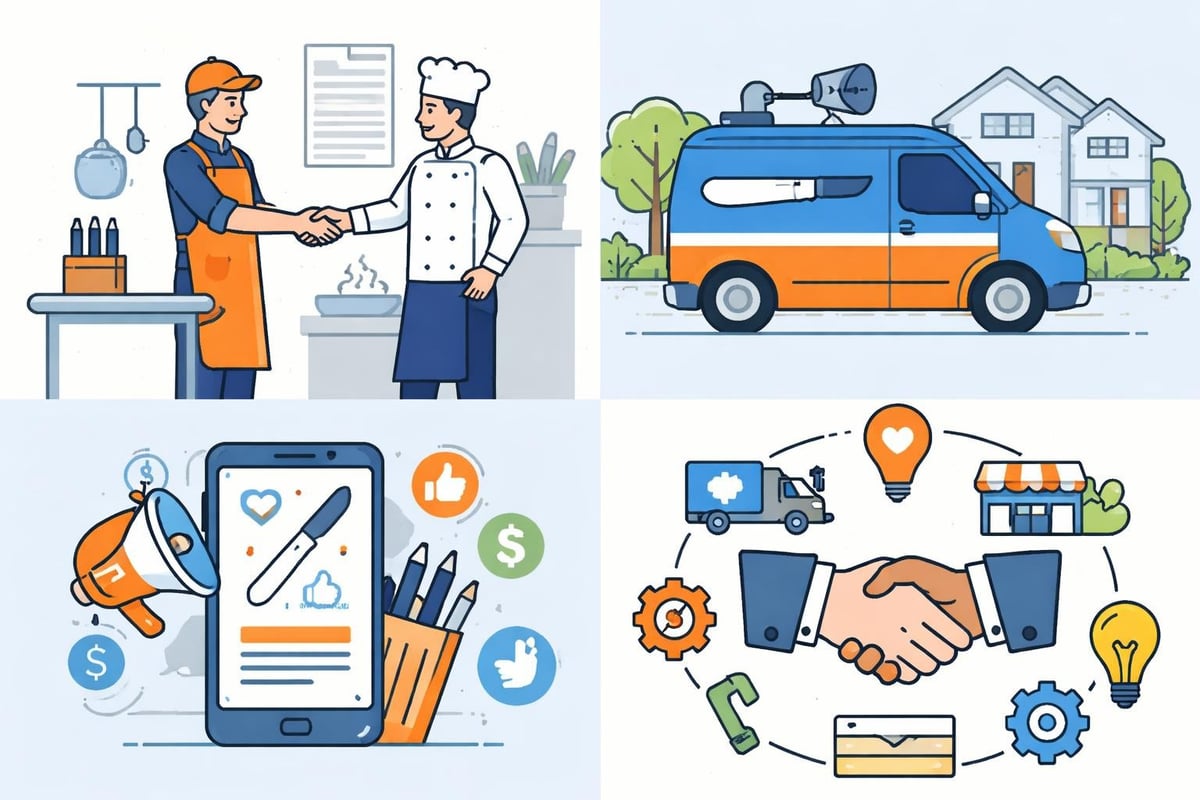
Complementary businesses provide excellent referral sources. Kitchen supply stores, cooking schools, butcher shops, and gourmet food retailers all interact with customers who need sharpening services. Offer these partners referral fees or reciprocal promotion arrangements.
Farmers markets represent particularly valuable venues. Set up a booth offering on-site sharpening while shoppers browse. This visibility generates immediate revenue while building your customer database for future mobile service calls.
Operational Excellence and Customer Service
Success in the knife sharpening business depends heavily on technical quality and customer experience. Superior sharpening results in repeat business and referrals, while poor work damages reputation quickly in tight-knit communities.
Quality Control and Consistency
Develop standardized processes for inspecting, sharpening, and testing each blade. Document your procedures to ensure consistency, especially if you eventually hire employees. Many professionals use magnification to inspect edges before returning items to customers, catching any imperfections.
Quality Assurance Checklist:
- Inspect blade for damage before sharpening
- Select appropriate angle based on blade type and use
- Sharpen in stages from coarse to fine grits
- Hone and strop for refined edge
- Test sharpness using paper or tomato tests
- Clean blade thoroughly before returning
- Document any damage or concerns for customer
Photography serves multiple purposes. Take before/after photos for marketing materials, but also document pre-existing damage to protect against liability claims. Some operators provide customers with sharpness certificates or edge angle documentation, particularly for expensive or collectible knives.
Scheduling and Route Optimization
Efficient scheduling maximizes your earning potential by reducing travel time and increasing productive hours. Route planning software helps cluster appointments geographically, while automated booking systems reduce administrative burden.
For mobile operations, establish set days for specific areas. "West side Wednesdays" or "downtown Fridays" train customers when to expect you, making it easier to build dense routes with minimal driving between stops.
Scaling Your Knife Sharpening Business
Once you've established steady cash flow and refined your processes, multiple growth paths emerge. Scaling can mean geographic expansion, service diversification, or building a team to multiply your capacity.
Adding Services and Products
Diversification increases revenue per customer while providing solutions for different needs. Consider adding these complementary offerings:
- Knife sales (new and used quality blades)
- Sharpening stones and maintenance tools
- Knife skills classes and demonstrations
- Tool sharpening (axes, chisels, garden tools)
- Blade restoration and repair services
- Custom knife making or modification
Retail products provide passive income potential, as customers buy whetstones or honing oils between professional sharpenings. Even small product margins add up when sold to a regular customer base.
Hiring and Training Team Members
Expanding beyond solo operation requires finding and training reliable team members who can maintain your quality standards. Start with part-time help for route expansion or specific geographic areas.
Training programs should be comprehensive, covering technical skills and customer service standards. Many successful multi-employee knife sharpening businesses use apprenticeship models where new sharpeners work alongside experienced operators before serving customers independently.
Creating Structured Business Plans
As your operation grows, formalized business planning becomes increasingly valuable. Resources like customizable knife sharpening business plans provide frameworks for strategic thinking about finances, marketing, operations, and growth.
A solid business plan helps with:
- Bank financing for equipment or vehicle purchases
- Setting realistic growth targets and timelines
- Analyzing profitability by service line or customer segment
- Planning marketing budgets and measuring ROI
- Preparing for seasonal fluctuations in demand
Financial Management and Profitability
Understanding your numbers separates profitable businesses from struggling ones. Track key metrics to make informed decisions about pricing, marketing investment, and operational efficiency.
Critical Financial Metrics:
- Revenue per hour (including drive time)
- Customer acquisition cost by channel
- Average customer lifetime value
- Operating margin percentage
- Equipment depreciation and replacement planning
Most successful knife sharpening businesses achieve 60-80% gross margins on services, with variable costs primarily consisting of consumables like grinding belts and whetstones. Fixed costs remain low for mobile operators, potentially allowing net profit margins exceeding 50% once established.
Pricing Strategy Evolution
As you build expertise and reputation, gradually increase prices to reflect your value. Many operators undercharge initially to build volume but fail to adjust pricing as their skills improve and demand grows. Annual price increases of 3-5% maintain profitability as costs rise.
Premium pricing strategies work particularly well when you offer exceptional service, convenient scheduling, or specialized expertise with high-end knives. Japanese blade specialists, for instance, can charge 2-3 times standard rates because few competitors possess the necessary knowledge.
Legal and Safety Considerations
Operating a knife sharpening business involves inherent risks that proper precautions and insurance coverage mitigate. Protecting yourself legally and physically ensures long-term viability.
Business Structure and Licensing
Choose an appropriate business structure (sole proprietorship, LLC, or corporation) based on your risk tolerance and tax situation. Most operators form LLCs to separate personal and business liability, protecting personal assets if a customer injury or property damage claim arises.
Required licenses vary by location but typically include:
- General business license from your city or county
- Sales tax permit if selling products
- Vehicle permits for commercial use
- Zoning approval for fixed locations
Consult with local authorities and potentially a business attorney to ensure full compliance. Operating without proper licensing risks fines and makes you ineligible for business insurance coverage.
Insurance Protection
General liability insurance protects against customer injury or property damage claims. If a customer cuts themselves on a knife you sharpened, or if you damage an expensive blade, insurance covers legal defense and potential settlements.
Commercial auto insurance becomes necessary if using your vehicle for business purposes. Standard personal auto policies exclude business use, potentially leaving you exposed if an accident occurs during service calls.
Safety Protocols
Personal safety while sharpening prevents injuries that could sideline your business. Always wear safety glasses when using powered equipment, as metal particles can cause serious eye damage. Cut-resistant gloves protect hands when handling sharp blades, though many professionals avoid gloves during actual sharpening for better touch sensitivity.
Proper ventilation matters when working indoors with powered grinders, as metal dust and heat buildup can create health hazards over time. Mobile operators working from vans should ensure adequate airflow and consider dust collection systems for enclosed spaces.
Starting a knife sharpening business offers a realistic path to flexible income with manageable startup costs and growing market demand. The combination of technical skill development, strategic customer acquisition, and operational efficiency creates a sustainable venture that can scale according to your ambitions. Whether you're exploring beginner-friendly side hustles or building a full-time service business, this opportunity provides proven revenue potential. Ready to discover more practical ways to build real income on your terms? Visit Side Hustle Hackers for comprehensive guides, honest reviews, and community support to help you launch and grow your next income stream.


